
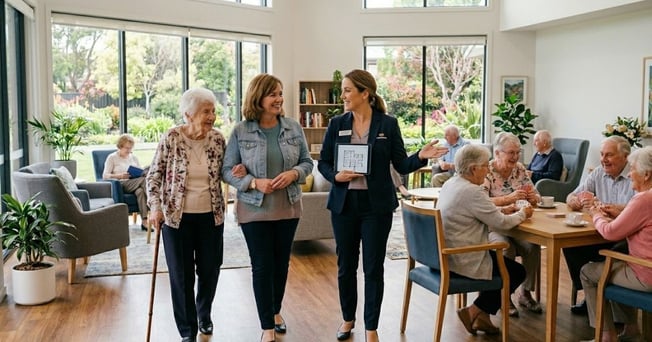
There’s often a moment during a senior living community tour when things slow down. You might be sitting in a common area while your loved one looks around. A team member passes by, greets a resident by name, and pauses to chat. Or maybe the room feels quieter, with no personal interactions and the television on in the background. These small moments speak volumes about what life might really be like. Beyond the brochure, you’re trying to decide: Will this community feel right day after day for me or someone I love?
Key Takeaways
-
The most important signals show up in everyday interactions
-
Pay attention to vague answers or rushed conversations
-
Green flags often look like transparency, flexibility, and connection
-
Trust what you notice, not just what you’re told
Table of Contents
Small moments matter during your assisted living tour
Assisted living tour red flags
Green flags in assisted living
Assisted living our tips: questions to ask and what to notice after
Small moments matter during your assisted living tour
Most communities will walk you through their services, pricing, and amenities. What’s harder to explain and more important is how daily life actually unfolds.
As you tour, notice:
-
Whether residents are participating
-
Whether team members pause to connect or seem rushed
-
Whether your questions lead to clear answers
For example, you might see a resident hesitating near a doorway and a team member gently step in, offering help without rushing or taking over. This kind of interaction tells you far more than a list of services.
The environment matters, too, including how spaces are used and how the day flows.
Learn more about how engagement and environment shape daily life at The Birches.
Assisted living tour red flags
Not every red flag means “walk away.” But noticing assisted living tour red flags early helps you ask important questions and avoid surprises.
Look for:
Answers that stay surface-level
-
If conversations don’t leave you with clear answers, trust your instincts.
-
Without real examples, it’s hard to picture what daily life will actually be like.
-
If something feels vague, it’s okay to ask follow-up questions.
Avoidance of how care evolves
-
If a community avoids explaining what happens if a residents’ needs change, take note. You’re not just choosing a community for today. You’re also planning for the future and making sure your loved one always has the support they need.
One-size-fits-all language
If everything sounds standardized, it may not reflect personalized care. Communities that individualize care can explain how support is adjusted for each person.
Explore how assisted living care can be customized at The Birches.
A tour that feels rushed
Pay attention to how your tour feels, not just what you see. Pacing matters. If you’re being moved quickly from space to space, or your questions feel brushed off, it’s worth noticing. A productive tour should feel like a conversation, not a walkthrough—and certainly not a 5k.
Green flags in assisted living
Recognizing green flags in assisted living can help you compare communities with confidence.
Look for:
Clear, specific answers
-
When someone shares a real example or shows you where something is written down, it builds trust. Clear answers are helpful, but specific examples give those answers meaning. When a team member can explain how something works in everyday life, it helps you picture the experience your loved one would actually have. And when they can point to a policy, care plan process, or written resource, it shows there is structure behind the promise. That kind of transparency can make a community feel more reliable, thoughtful, and prepared.
-
A team member may not have all the answers at their fingertips, but willingness to follow up also showcases reliability.
Natural interactions
Interactions between team members and residents reveal how a community’s values show up day to day. These moments reflect a community’s culture more than anything else.
The Birches uses a Montessori-inspired approach that centers care around each Member.
Flexibility in daily life
This often shows how the day is structured, whether residents follow a set schedule or decide how they spend their time. Ask if residents can choose when they wake up, what they eat, and how they spend their time.
Open, ongoing communication
Residents have the ability to choose who and how their family stays informed and involved in their care. On a tour, make sure to ask for examples of how families can be included, not just during major changes, but day to day.
Communities like The Birches fold family support and communication into the core of their approach.
Transparency around costs and expectations
Communities that are upfront about pricing, services, and care make planning easier and reduce confusion.
The Birches shares assisted living costs on our website so you can understand what to expect before your tour.
Assisted living tour tips: questions to ask and what to notice after
If you’re not sure how to move past surface-level responses, these follow-up questions can help:
-
“Can you walk me through what that looks like on a typical day?”
-
“How might that change if my loved one needed more support over time?”
-
“How would our family be kept informed, and who would we hear from?”
-
“Can you show me where that’s outlined in writing?”
-
“What does that look like in real life for someone living here today?”
-
“How do you personalize that based on each resident’s needs and preferences?”
-
“What should families expect in the first few weeks after moving in?”
-
“How do you handle changes in care or routine as needs evolve?”
-
“Who is involved in those decisions, and how are families included?”
-
“What should I be paying attention to as I compare communities?”
These can help you move from general answers to real, day-to-day expectations.
After your visit, reflect on:
-
What felt clear?
-
What still feels uncertain?
-
Where did conversations feel open, and where did they feel harder?
Your impressions can help you separate a place that looks good on paper from one that truly feels right.


